cos'è RFID, come funziona e a cosa serve
RFID technology
Cos'è la tecnologia RFID?
RFID technology (Radio Frequency IDentification) is used for the identification and / or automatic storage of data relating to objects or animals. It is based on the storage capacity of certain electronic labels, called Tags (or transponders), of information regarding the object to which it is coupled. These tags respond to remote interrogation by devices called readers.
RFID technology was used for the first time in 1939, during the Second World War, and has been developed since the sixties as a derivation for civil purposes of the military radio frequency system of Identification friend or foe (a system invented in Great Britain that was used to identify planes and understand if they were friendly or enemy vehicles).
Over the years, the technology has developed and has been used in many sectors: industrial, automotive, medical, e-Government (see passports, identity cards, etc.), transport and other uses. Given its versatility, it is considered a general purpose technology (such as electricity and the wheel for example) and has a high level of "pervasiveness", that is, once a use case is found in a point of the supply chain, the application and benefits they propagate quickly upstream and downstream of it. Through the use of RFID it is possible to create, thanks to the development of information technologies and the internet, a system of interconnected objects that allow the collection and processing of data in a single large global network.
What do you want to know about RFID technology?
How it works
It is a radio frequency wireless communication system where the RFID reader, once in the operating range, detects the tag and queries it, the latter responds by transmitting the data contained in the memory to the reader (usually information on the product on which it is applied).
The goal is to get data to analyze, so that information about tracking, stock and business planning can be obtained.
Components
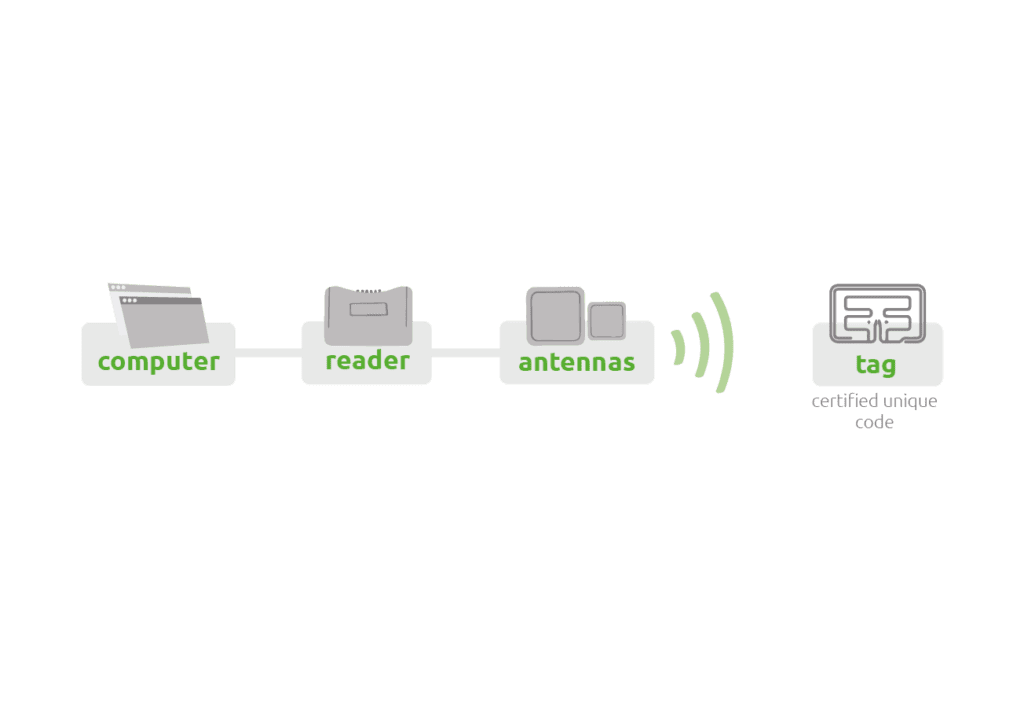
RFID technology requires four fundamental elements: tags, management software, antennas and readers. Let's see them in details:
- TAG - small radio frequency device consisting of a chip which is connected to a bidimensional layout of conductive material, which is an antenna.Tags enable long and short range data transmission without physical and visual contact. With some exceptions, the data contained in the tag memory has a unique identification code.
- Reader - it is the component that manages the electromagnetic field and interprets the data from the RFID tag answer. Readers can be fixed components or mobile or wearable devices with integrated antenna: in fact, readers and antennas can be integrated in a single device or be independent components.
- Antenna - it is the component that allows to generate the electromagnetic field that detects the RFID tags in a certain area. The antennas are controled by RFID readers, which in turn interpret the signal. The electromagnetic field activates the RFID tag antenna, generating a current that activates the microchip.
- Management software - information system that is connected to the network and to the readers. This system allows, starting from the identification codes coming from the tags, to obtain all the available information associated with the objects and to manage this information for the purposes of the use case.
RFID tags
Also called RFID Transponder, an RFID tag is the main element of the whole system as it allows you to read and write data contained therein. Tags can vary in shape, size, material and operating frequency but all of these can be grouped into three large families: active tags, passive tags and semi-passive or semi-active tags.
Active
This category includes those tags that receive energy from their own power supply to operate, usually made up of a long-lasting battery. They are capable to transmit data to the reader and cover far greater distances than passive tags. They have large memory, are often rewritable and can contain sensors to take measurements, such as heat, temperature and pressure. They are usually designed for durable use.
Passive
Passive RFID tags that do not have their own energy source but receive it from the signal coming from the Reader. They consist of a chip (with unique identifier and possible memory), an antenna and a support or container. As the reader passes, the radio frequency activates the microchip inside the tag, providing the energy necessary to operate. This energy during the reading phase will be reused to respond to the reader by transmitting a signal with all the information stored inside of it; in the writing phase, however, it will allow you to save the data sent by the reader. The distances in which they can operate are of the order of a few meters or a few centimeters depending on the operating frequency.
Semi-passive
They are tags equipped with their own energy source which is used to power the microchip or other devices (such as sensors) but not to power the transmitter. To be able to transmit information, they must enter the range of the reader / antenna.
Types of passive RFID tags
Passive tags can be Near-Field or Far-Field, depending on the working frequency or the working distance and the physical phenomenon they are based on.
Near-Field
In the near-field region, the interaction between the components is dominated by the magnetic field generated by the antenna, which induces an electric current in the tag by inductive coupling and enables the chip to be activated. Tags of this type are part of the LF and HF classes, and some of the UHF antenna layouts.
Far-Field
In the far-field region, the interaction of the components is dominated by the electromagnetic field created by the antenna. The RFID tag resonates with the frequency of the EM field and the current generated activates the chip. Tags of this type are part of the UHF class.
Operative frequencies of RFID technology
RFID tags can be further classified based on the frequency of the signal used for communication. These frequencies depend on the nature of the tags and the intended applications, are also regulated by international and national organizations. The most used frequency bands are the following:
LF band
Acronym for Low Frequency, it is located in the lowest part of the RF spectrum, within the LF band there are two most used operating frequencies: 125 Khz or 135 Khz. It was the first to be used historically and still has a significant presence on the market today. Characterized by a very limited reading distance, it operates almost in contact, and given its characteristics it is ideal to be used for alarms, attendance or access control, traceability of pets and breeding, etc.
HF band
Acronym for High Frequency, are frequencies that work at 13.56 Mhz, it is supported in the ISO 14443, ISO 15693 and NFC (Near Field Communication) standards. It is today the universal band, because it can be used all over the world. It can be used for identification and tracking, pallets, access control and other use cases that require a short reading distance (up to 1.20m).
UHF band
Acronym for Ultra High Frequency, these are frequencies that work at 868 MHz or 915 MHz, normalized in the EPC reference standards. The use of this frequency may be restricted by the authorities of individual countries in terms of maximum power and frequency bands. In fact, the band is not assigned uniformly in the USA, Europe and Asia. Tags of this type have a greater reading distance than the others and are therefore mainly used for retail, logistics, warehouse management, etc.
Benefits of RFID technology
Using RFID allows you to eliminate the cost of errors. In fact, it allows to lower the risk of losses, thefts and incorrect shipments.
It is used to have a more efficient warehouse management, the total traceability and identification of the product and trademark protection.
- Extreme reduction of inventory errors
- Total control of the stock
- Real time inventory handling update
- Allows for distant reading and out of line of sight
- Reduction of labor costs
Advantages over optical tracking technologies (barcode, QRcode,...)
Being the functioning of barcode technology very similar to that of RFID, it is often chosen as an alternative to passive RFID tag technology.
If on one hand RFID technology involves a larger investment than barcodes, on the other it sure offers greater benefits. Unlike 1D/2D codes, RFID labels can also be rewritten and protected with passwords, thus making it a safer and more reliable tool
These two technologies can still be used in combination though. On RFID tags it is in fact possible to print any type of data; combining RFID tags and 1D / 2D codes allows continuous tracking when it is not possible to use RFID readers, or even in the rare eventuality that the chip is damaged.
Reading performance
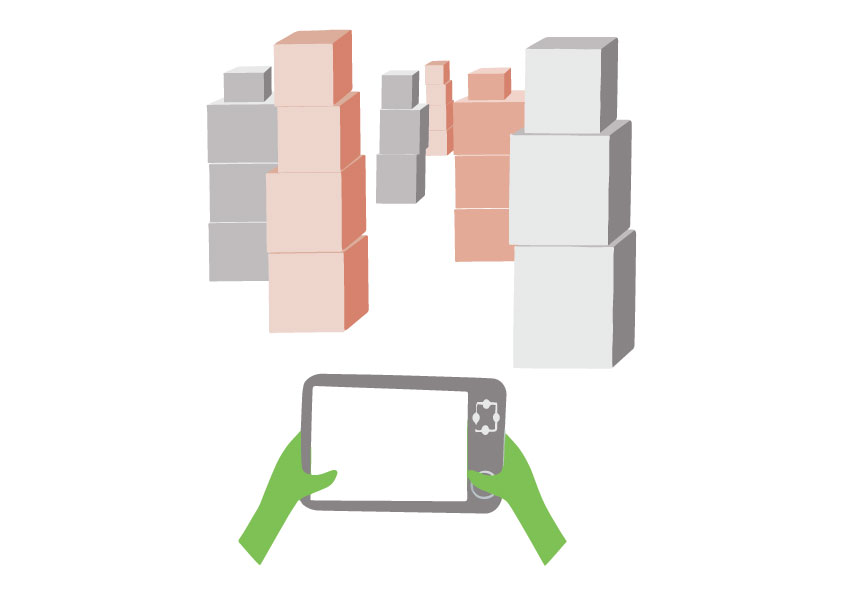
Optical technologies allow to read one product code at a time, making operations such as warehouse loading, unloading and inventory long and expensive. With RFID technology it is possible to read over a hundred products simultaneously.
Reading distance
While optical technoloies have a punctual reading range, the RFID reader can detect tags in an area of radius of up to 16m.
Reading speed
Even the reading speed of the RFID readers is astonishing; it is in fact very fast (in the order of ms for the reading of hundreds of tags).
Possibility of reading through objects
RFID tags can be scanned even if they are out of the line of sight, unlike identification systems with optical technologies.
Unique identification
RFID tags have a unique identification code, each object to which it is affixed becomes in fact unique and identifiable, in this way it is possible to trace it along the entire supply chain. Optical technologies do not offer this possibility and usually products of the same type have the same barcode.
Use cases of RFID technology
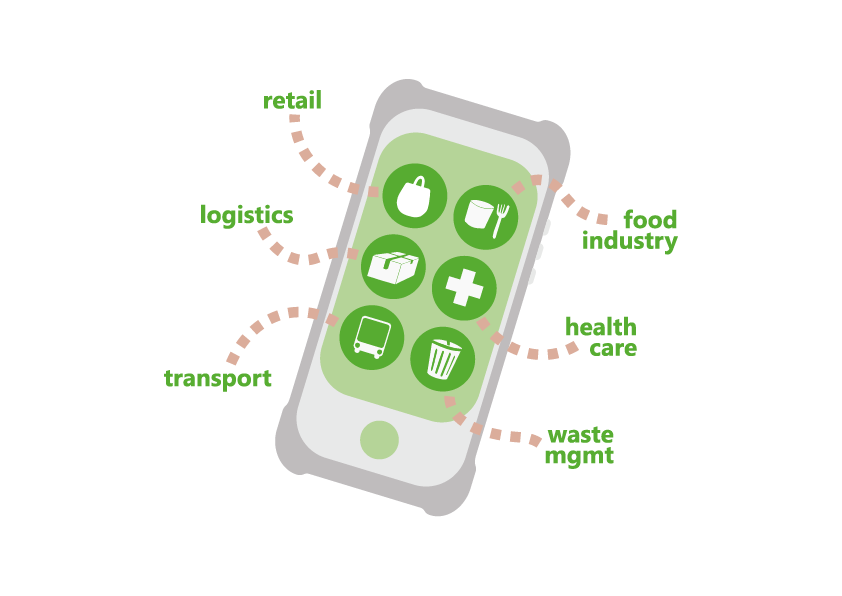
RFID technology is very versatile, this is also demonstrated by the multiple applications and uses that are identified over time. In fact, over the years it has shown a strong adaptability to the different sectors in which it has been used, among these we find:
- Logistics
- Retail
- Healthcare
- Waste management
- Access control
- Running
- Food chain management
- Transportation
- Anti-counterfeiting
- Costumer experience